The 9th High-Level Panel on ESG Finance





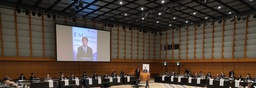
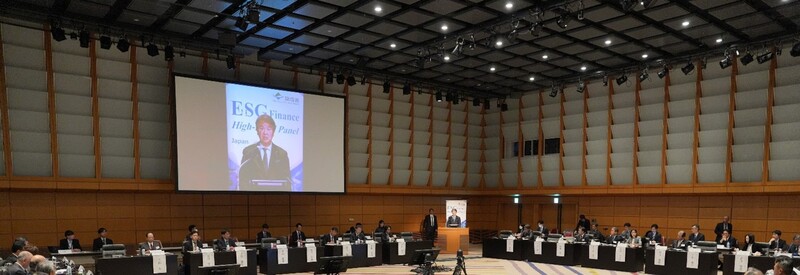 Scenes from the 9th High-Level Panel on ESG Finance held on Friday, March 6, 2026
1. About the 9th High-Level Panel on ESG Finance
The Ministry of the Environment of Japan established the High-Level Panel on ESG Finance, based on the recommendations of the High-Level Meeting on ESG Finance (July 2018), as a forum for leaders from the finance and investment sectors and the government to work together to discuss and take action to promote awareness and initiatives related to ESG finance. The Panel has also regularly monitored progress in initiatives aligned with these recommendations.
At this 9th session, discussions were held from multiple perspectives regarding developments following the Declaration on Financial Action for Building a Green Economy System, adopted at the 8th session, and on deepening ESG finance.
2. Session report
In his opening remarks, Minister of the Environment ISHIHARA Hirotaka emphasized that despite rapidly changing domestic and international trends surrounding environmental policy, Japan will steadily advance its efforts toward achieving net zero emissions by 2050. He further highlighted that coexistence with local communities is a fundamental prerequisite for maximizing renewable energy deployment and that the national government will refrain from procuring renewable energy from power generation companies that violate laws and regulations, while also expecting financial institutions to exercise prudent judgment, including strict compliance oversight, as part of their social responsibility. Furthermore, he stated that finance serves as the driving force for realizing a sustainable society, and called for intensified efforts in this regard.
In Session 1, under the title “Progress from the Declaration on Financial Action for Building a Green Economy System” based on the content of the Sixth Basic Environment Plan, the Ministry of the Environment and the Financial Services Agency reported their initiatives to promote sustainable finance. Additionally, the Regional Banks Association of Japan delivered a presentation on the sustainability promotion initiatives undertaken by regional banks. During subsequent discussions, the panelists deliberated on enhancing regional financial capabilities and trends in ESG finance. Opinions were shared on the roles and initiatives expected of financial institutions to facilitate the adoption of ESG finance into local communities, as well as domestic corporate trends in sustainable finance.
In Session 2, the Japanese Bankers Association, the Kyushu Economic Federation, and the Impact Startup Association introduced concrete initiatives related to the three pillars aimed at deepening ESG finance outlined in the Declaration on Financial Action for Building a Green Economic System, and discussions ensued on strategies and challenges for promoting these initiatives across a wide range of industries. During the discussion on expanding environmental finance, opinions were expressed on the role of financial institutions in achieving carbon neutrality/net zero, the importance of collaboration with industry, the necessity for efforts by asset management companies to promote sustainable finance, and the significance of each business sector in realizing a circular economy. During the discussions on green management in regional companies, opinions were expressed on the importance of fostering momentum for ESG finance through collaboration between regional financial institutions and economic organizations, as well as addressing regional issues. Furthermore, during the discussion on expanding investment in environmental startups, opinions were expressed on the current state of capital inflows to impact startups, sharing of case studies on corporate growth, and the importance of startup funding for addressing social challenges.
In his closing remarks, State Minister for the Environment AOYAMA Shigeharu addressed recent issues related to mega-solar power projects, emphasizing the importance of impact-focused, socially responsible investments, as discussed by the panel, to ensure that environmental investments do not negatively affect local communities. Furthermore, to support such investments, he indicated that the Ministry of the Environment intends to advance initiatives in collaboration with relevant ministries and agencies.
To view the agenda, session materials, and list of members, please visit the Ministry of the Environment website below.
https://www.env.go.jp/policy/esghighlevel.html
本プレスリリースは発表元が入力した原稿をそのまま掲載しております。また、プレスリリースへのお問い合わせは発表元に直接お願いいたします。
プレスリリース添付画像
このプレスリリースには、報道機関向けの情報があります。
プレス会員登録を行うと、広報担当者の連絡先や、イベント・記者会見の情報など、報道機関だけに公開する情報が閲覧できるようになります。
このプレスリリースを配信した企業・団体

- 名称 環境省
- 所在地 東京都
- 業種 政府・官公庁
- URL https://www.env.go.jp/

過去に配信したプレスリリース
The 9th High-Level Panel on ESG Finance
3/19 14:00
第9回ESG金融ハイレベル・パネル開催について
3/19 14:00
環境省、第7回「ESGファイナンス・アワード・ジャパン」表彰式を開催
2/24 14:00
環境省「ESG金融ハイレベル・パネル(第9回)」の開催について
2/13 16:00

環境省「グリーンな経済システムの構築に向けた金融行動に関する宣言」を公表
2025/3/25


俳優の富田 望生さん、フリーアナウンサーの政井 マヤさんらが若者や環境省と議論!
2025/3/12